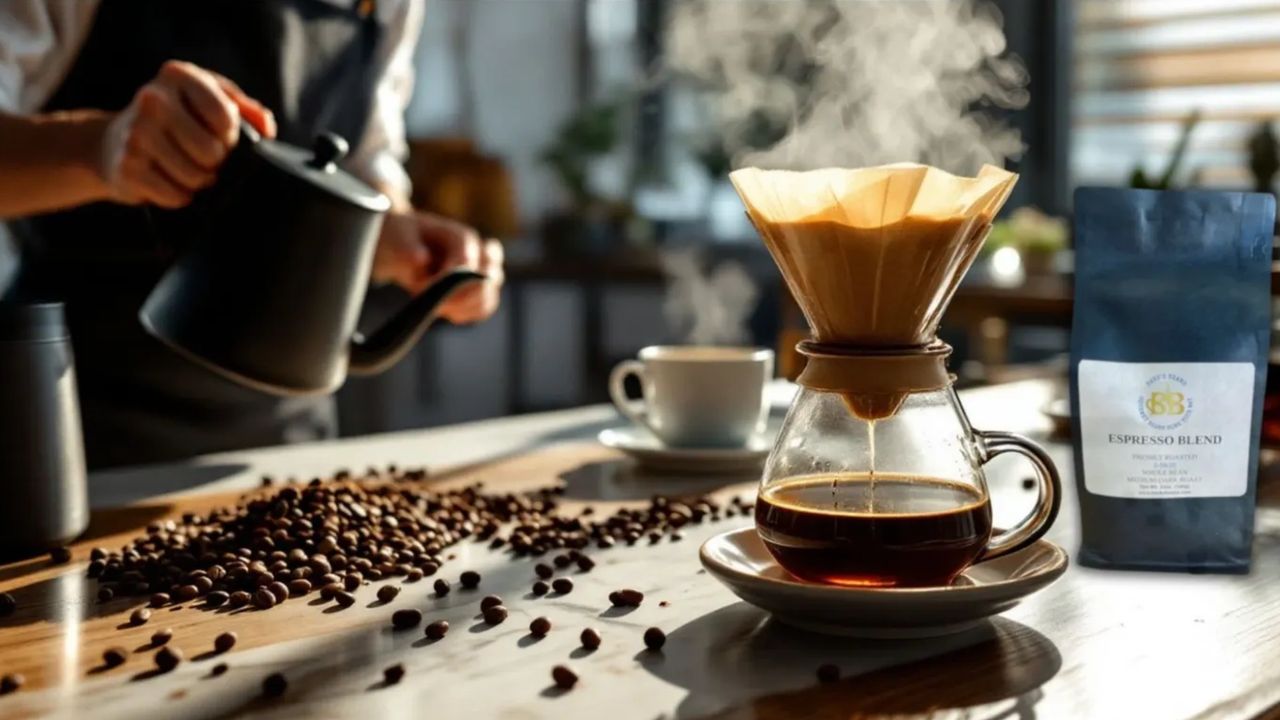
Great coffee at home comes down to a few fundamentals: clean filtered water at 195–205°F, fresh beans, the right grind for your method, and a ratio of about 1–2 tablespoons of coffee per 6 oz of water. Below, we answer the most common brewing questions to help you dial in…
Berk’s Beans sat down for a podcast interview about coffee, craft, and community — sharing the story behind the roastery, how we build bold blends, why freshness drives everything we do, and our best tips for brewing at home. At Berk’s Beans, every roast tells a story — and we…
Quick answer: store roasted coffee beans in an airtight, opaque container in a cool, dark, dry spot — away from air, light, heat, and moisture. Buy only what you’ll use in one to two weeks, grind just before brewing, and skip the fridge. Here’s everything that goes into keeping your…
Why is Jamaican Blue Mountain coffee so expensive? It comes down to five things: a tiny, strictly-regulated growing region, government certification on every export, labor-intensive hand-picking, very low yields on difficult terrain, and enormous global demand (especially from Japan). Together they make it one of the rarest coffees on Earth…
Coffee can cause heartburn because it’s naturally acidic, it can relax the valve between your stomach and esophagus (the LES), and its caffeine stimulates stomach acid. Stale coffee and drinking on an empty stomach make it worse. The good news: a few simple changes — fresher beans, lower-acid options, cold…
Coffee beans become oily mainly because of how dark they’re roasted: during and after “second crack,” the beans’ cell walls break down and natural oils migrate to the surface, creating that glossy sheen. Storage and age play a role too. Here’s what’s actually happening, whether it matters, and how to…
A great starting coffee-to-water ratio is 1:15 to 1:18 — one gram of coffee for every 15 to 18 grams of water — adjusted by brewing method and taste. Getting the ratio right is the single biggest lever for a balanced, repeatable cup. Here’s a method-by-method breakdown. Why Ratios Matter…
Legend says coffee was discovered in 9th-century Ethiopia by Kaldi, a goat herder who noticed his goats grew lively after eating bright red coffee cherries — a curious moment that grew into one of the world’s most beloved drinks. It’s a story of discovery, culture, and connection that still unfolds…
Specialty coffee keeps growing because drinkers increasingly treat coffee as an experience — valuing quality, ethical sourcing, and café-level results at home. It’s not a passing fad but a lasting shift in how people buy and brew. Here’s what’s driving it. (New to the term? See what specialty coffee actually…
Used coffee grounds are great in the garden: they add nitrogen and organic matter to soil, enrich compost, deter some pests, and feed earthworms. Instead of tossing your grounds, put them to work. Here are five ways to use them. A great cup starts with high-quality beans — but your…